
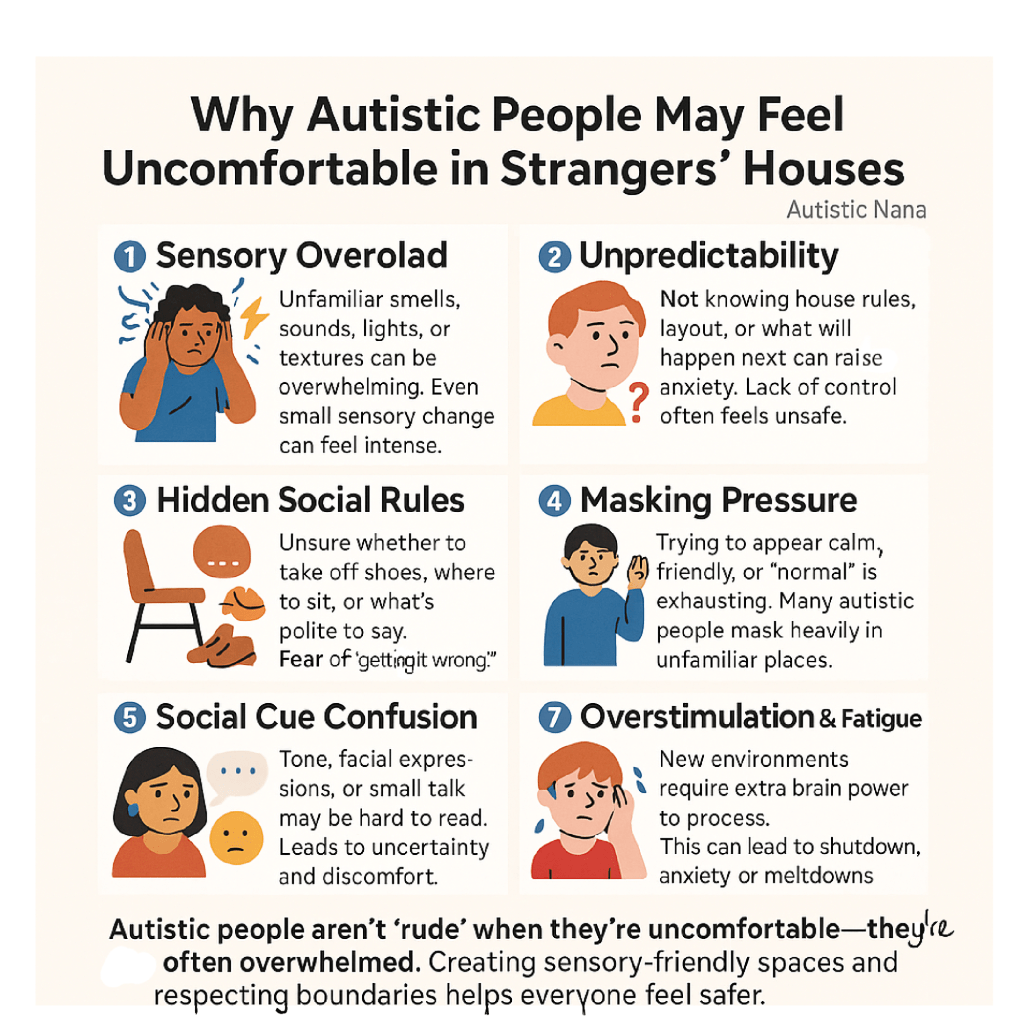
🧠 1. Unfamiliar Sensory Environment
- Smells — unfamiliar perfumes, cleaning products, pets, or food scents can be overwhelming.
- Lighting — bright, flickering, or dim lighting can cause discomfort or disorientation.
- Sounds — background chatter, TVs, clocks, or appliances can feel intrusive.
- Textures — carpets, furniture, or different temperature levels may feel “wrong” or overstimulating.
🧭 2. Lack of Predictability & Control
- They don’t know the house layout, routines, or what’s expected of them.
- They can’t predict when they’ll be offered food, asked to sit, or when it’s time to leave.
- Uncertainty increases anxiety and sensory overload.
🪑 3. Social Rule Ambiguity
- Many autistic people find unwritten social rules confusing.
Examples:- Should they take their shoes off or not?
- Is it polite to sit down or wait to be told?
- Can they ask for a drink or is that rude?
- Fear of accidentally breaking a rule can cause intense discomfort.
🧍 4. Masking Pressure
- Being in someone else’s home often increases the need to “mask” — to act “normal,” smile, make eye contact, or appear at ease.
- Masking is exhausting and can lead to burnout or shutdown afterwards.
💬 5. Difficulty Reading Social Cues
- Interpreting tone of voice, facial expressions, or informal conversation can be hard.
- This can make interactions feel unsafe or confusing, especially in a new environment.
🧱 6. Loss of Safe Space / Escape Options
- At home, autistic people often have safe zones or coping strategies (e.g., retreating to their room, using sensory aids).
- In a stranger’s house, they may not have anywhere to regulate or recover, increasing discomfort.
🌡️ 7. Overstimulation & Fatigue
- New environments require extra cognitive processing to filter sensory input, track social rules, and manage interactions.
- This can quickly become overwhelming, leading to anxiety, shutdown, or meltdowns.
🧩 8. Feeling Like a “Guest”
- Social expectations around being polite, accepting hospitality, or engaging in small talk can feel forced and draining.
- Some autistic people feel deeply uncomfortable being the centre of attention or having their movements monitored (e.g., host watching to make sure they’re “ok”).
🛑 9. Past Negative Experiences
- Previous situations of sensory overload, being misunderstood, or feeling judged can make visits to new houses feel unsafe or risky.

Leave a comment